
THE PHILIPPINES
Summary
Information about SRI initially came to the Philippines through several paths. The International Institute for Rural Reconstruction (IIRR) took an early interest in SRI after Norman Uphoff visited its center in Cavite in 1997. In June 1998 it hosted a national NGO seminar on rice, cosponsored with ILEIA, and CIIFAD supported participation by Justin Rabenandrasana, secretary of Association Tefy Saina in Madagascar, to introduce SRI to NGOs in the Philippines. ILEIA invited Rabenandrasana and Uphoff to provide an article on SRI for its newsletter. The CIIFAD website also provided information on the innovation. In 1999, the Consortium for Development of Southern Mindanao Cooperatives (CDSMC) conducted its first trials in Mindanao that resulted in 4.95. t/ha, a substantial increase from the usual yields of 1.5-2.5 t/ha. Adaptation of SRI concepts to upland rice production were then made by Broader Initiatives for Negros Development (BIND) based in Bacolod City. It conducted trials adapting SRI to upland conditions in Negros between 1999 and 2002, with results for some spacings averaging over 7 t/ha.
After the director of the Agricultural Training Institute (ATI) in the Department of Agriculture learned about SRI at a conference in Indonesia in 2000, the ATI center in Southern Mindanao undertook trials that averaged over 7 t/ha in 2001 and 12 t/ha in 2002. In 2004, the Cotabato ATI center reported even higher SRI yields. The International Rice Research Institute (IRRI) at Los Baños, however, reported a disappointing yield of only 1.44 t/ha in its 2003 trials followed by a yield of 3 t/ha in 2004. The Philippine Rice Research Institute (PhilRice) trials similarly did not report significant increases with SRI.
Engr. Carlos Salazar, at the time a Regional Irrigation Manager in eastern Mindanao for the National Irrigation Administration (NIA), undertook experiments on his own farm that resulted in yield of 6.9 tons in 2003, 8.9 t/ha in 2004, and 9.6 in 2005. His adaptations, called "Sustainable System of Irrigated Agriculture" (SSIA), are included in a World Bank Institute instructional video (right). SRI trials in 2005 at Visayas State University’s Farm and Resource Management Institute (FARMI) in Baybay City on the island of Leyte, registered SRI yields of 10.16 vs. non-SRI yields of 3.48 t/ha. PRRM has worked with the NGO Save the Ifugao Rice Terraces Movement (SITMO) in promoting SRI in the Ifugao Terraces, a UNESCO World Heritage site, with positive results for for several years. Reports of trials by a number of NGOs and government agencies as well as university research by graduate students and faculty at University of the Philippines at Los Baños and other universities are covered in a 2004 report by Roberto Verzola. (Several UPLB master's theses are listed in the articles section below).
In 2002, SRI-Pilipinas, a consortium of farmers' groups, civil society organizations, academics, and government researchers began functioning and initiated an on-line community that continues to expand. A series of national SRI workshops hosted by the Philippine Movement for Rural Reconstruction began in April 2002, with follow-up workshops in March 2003 and March 2004. SRI-Pilipinas subsequently launched a nationwide training program on SRI principles and practices, funded by the Department of Agriculture through the Philippine Rural Reconstruction Movement (PRRM). According to Roberto Verzola, the SRI-Pilipinas Network as of 2009 had held 50 trainings in 49 provinces throughout the Philippines which benefited an estimated 1,000 farmers. Between 2010 and mid-2012, SRI-Pilipinas has conducted around 120 trainings nationwide, each training attended by 20-25 farmers (see map below). During 2011-2012, the NGO PASALI, which has been promoting SRI in Mindanao since 2006, was selected to be the Department of Agriculture's service extension provider for SRI in that part of the country. During 2013-14, SRI-Pilinas carried out a contest for organic SRI production. During 2014-2015, the Department of Agrarian Reform, along with other local partners, has been active in promoting SRI in both Zamboanga del Sur and Zamboanga del Norte. A Philippine delegation attended the SE Asia Regional SRI Conference held in Malaysia, May 26-28, 2015, and participated in planning for a SE Asia Regional SRI Network along with other national SRI networks in SE Asia. [See "progress and activities" below for other news about SRI in the Philippines during 2015-2017.]
During 2017, an SRI entry using an inbred variety placed 9th in yield out of 19 entries in a national rice derby (and with much lower costs), well ahead of the PhilRice entry. In 2017 and 2018, the ZIDOFA group in Panay won awards and accolades in the Philippines for helping farmers to both grow and successfully market organic SRI rice. SRI-Pilipinas sent a four-person delegation to attend the Workshop to Enhance Cooperation and Sharing among SRI National Networks in Asia, held October 18-19, 2018, in Johor Bahru, Malaysia. This workshop helped tie SRI-Pilipinas more closely to other national SRI networks throughout Asia. During November 2018, the Department of Agriculture (DA) announced that it will be conducting SRI training for its staff who are involved in the DA's rice program. SRI-Pilipinas conducted the first training December 5-6, in cooperation with the DA's training arm, the Agricultural Training Institute (ATI). Thirty staff from 13 (of 16) regions attended. Subsequent trainings in Luzon were completed during July and August, 2019. Roberto (Obet) Verzola, an important member of the Philippines and global SRI communities, passed away on May 6, 2020. During October-March 2021, USAID/CDP Project PROSPER (Participation in Resilience Building and Organizing Safe and Progressive Communities for Empowerment, Climate and Disaster Risk Reduction) sponsored a season-long organic SRI training in Zamboanga del Sur. The results showed organic SRI could match or out-perform rice production carried out with chemical-heavy conventional methods.
Progress and Activities
2025 Updates
Seven Towns in Eastern Visayas Set to Scale Up Rice Poduction through SRI
[May 15, 2025] Around thirty rice farmers gathered at the Department of Agriculture Regional Field Office 8 (DA RFO) in Tacloban City for a stakeholders' coordination meeting. This meeting marked the initial steps for a new project titled "Enhancing Sustainable Rice Production through the Establishment of System of Rice Intensification (SRI) Clusters." Funded under the MASAGANA Rice Program, this project aims to expand the use of the System of Rice Intensification (SRI) in connected rice farms within irrigated lowlands. The goal is to make rice farming more efficient and profitable by working together in clusters, streamlining operations, and exploring other farm-related businesses. [See Dept. of Agriculture, Eastern Visayas Facebook post for more information.]
2024
[August 9, 2024] The Department of Agriculture-Cordillera (DA-CAR), in partnership with the Philippine Rice Research Institute (PhilRice), launched the Farmers Field School (FFS) on the System of Rice Intensification (SRI) in Abra on August 8-9, 2024. This initiative is part of the Rice Program's Scale-Up Project, aimed at improving rice production practices across the region. It also reflects the commitment of the agency to advancing sustainable agriculture in the Cordillera region by equipping farmers with modern, science-based farming techniques. The activity, which will be implemented over a four-month period, was participated in by 50 farmers, with 25 from Calao, Bucay, and 25 from Nagtupacan, Lagangilang. The program includes weekly sessions lasting four hours, featuring both lectures and practical demonstrations focused on the Palay Check System and Agro-ecosystem Analysis (AESA). [For more informationa, see post on the Dept. of Agriculture Cordillera Facebook page.
2023
[November 4, 2023] In the recent SRI Forum facilitated by the Philippine Council for Agriculture and Fisheries (PCAF), stakeholders urged the government to promote SRI adoption. According to an article in the Philippine Star, as conventional rice production practices become increasingly unprofitable, many farmers are turning to SRI as a means to continually enhance and embrace a more efficient and effective approach to rice cultivation
DA undersecretary for rice industry development Leocadio Sebastian said that while the country has been left behind by other countries in terms of reaping the benefits of the modern system of rice growing, SRI has a big future in the Philippines. Regional Agricultural and Fishery Council (RAFC) Zamboanga Peninsula vice chairperson and SRI practitioner Adelberto Baniqued said while financing is what prevents it from being widey practiced, the government is committed to SRI, with a budget of P250 million approved by the House of Representatives for its implementation; a bigger budget would be allocated for SRI in the future. [See articles in the Philippine Star, Manila Times, and The Thaiger for more information]
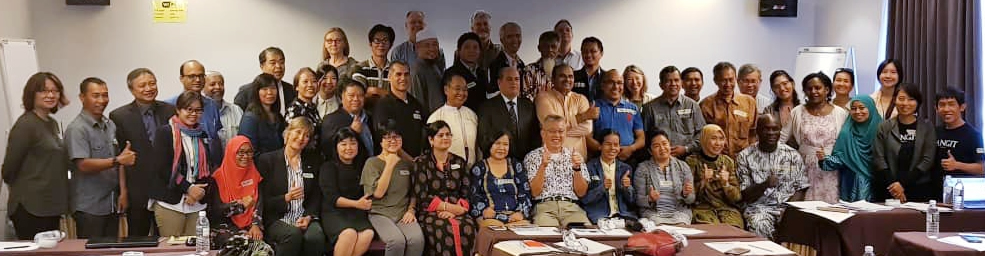
[October 20, 2023] A delegation from the global SRI community attended the 6th International Rice Congress (IRC)
in Manila, Philippines, held October 16-19, 2023. The group included SRI representatives from Chile, India, Indonesia, Iraq, Malaysia, Myanmar, Nigeria, the Philippines, UK, and USA. Various members of the group made scientific presentations and answered queries at the SRI booth at the IRC, and subsequently participated in side events, including a SRI Research Network meeting, a Philippines Dept. of Agriculture SRI Forum, a SRI meeting for national/regional SRI networks around the world, and field trips to three provinces.
The visit was hosted by the SRI-Pilipinas network, organized by SRI-Rice (a program at Cornell University), SRI Global (an NGO in Ithaca, New York) and IndoSRInet (the Indonesian SRI network), and funded by SRI-2030 (an NGO in the UK). In addition to the IRC events, several participants gave presentations at a Department of Agriculture Forum on SRI on October 20. Organized by the Philippines Council on Agriculture and Forestry (PCAF), the Forum on SRI Practice and Policy: Cross-Country Sharing included an address by the Philippines Undersecretary for Rice Industry Development, Leocadio Sebastian, and helped to strengthen the Philippine Government’s perception of what increased promotion of SRI could achieve within the rice sector. The government has recently approved 250 million pesos for SRI promotion throughout the country. Finally, with the assistance of SRI-Pilipinas members and Adelberto Baniqued, international participants visited SRI-Pilipinas SRI field sites and government assisted programs in the the provinces of La Union, Quezon, and Davao del Norte. [contact SRI-Pilipinas for more information.]
2021
[December 7, 2021] 50 Agrarian Reform Beneficiaries from Bintakay Farmers Association, had the opportunity to learn about the System of Rice Intensification (SRI), through a 2-day training under the Climate Resiliency Farm Productivity Support Program of the Department of Agrarian Reform - Marinduque. AGREA's Director of Abundance - Jonathan Quinto, was the resource speaker for the training. (AGREA is an innovative inclusive business that is founded on fair-trade, sustainable agriculture and replicable model of an agri-based economy). [See Plipino language article in the Marinduqe News or AGREA facebook item for more information.]
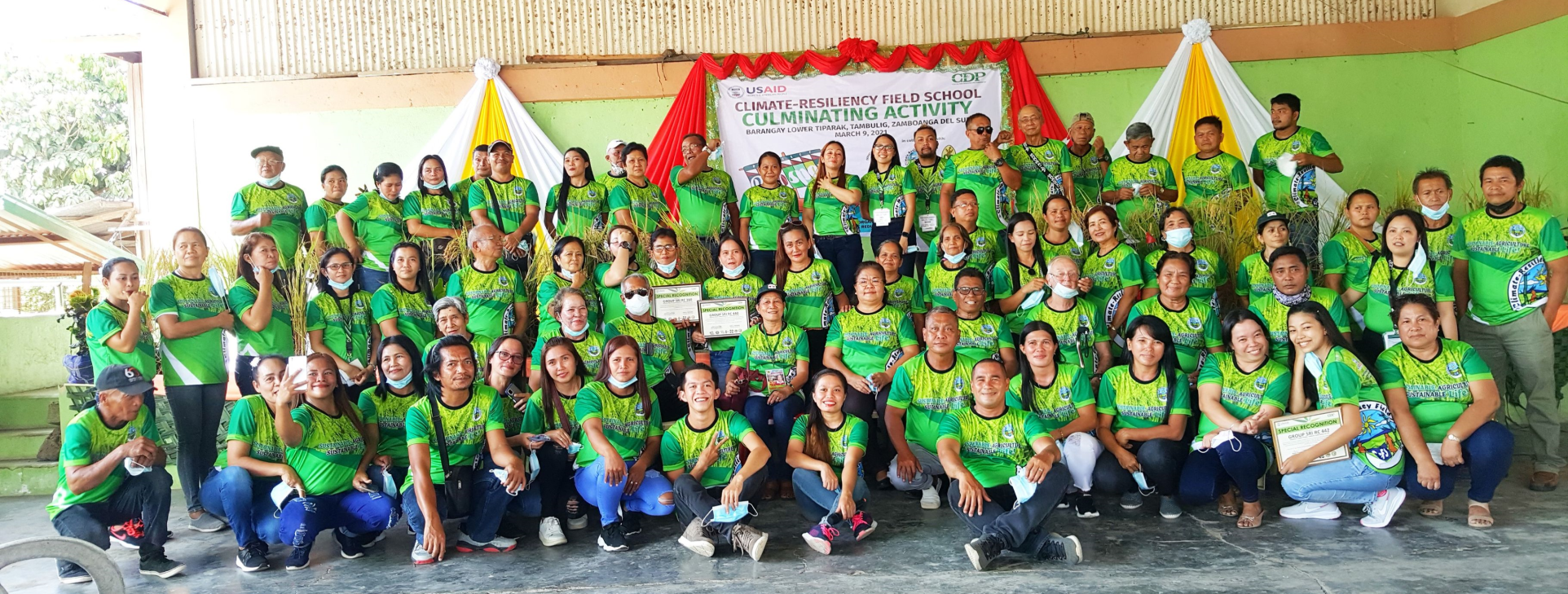
[April 15, 2021] As noted in a report by Adelberto Baniqued, Regional SRI Pilipinas Coordinator for Region IX, the unabated use of agrochemicals and antiquated farming methods in the Philippines have contributed to the environmental and health challenges as well as greenhouse gas emissions that are bringing about climatic change. The changing climate has brought havoc to small farming communities as rice crops have been damaged due to strong winds, floods and droughts. It is in this context that the USAID/CDP Project PROSPER (Participation in Resilience Building and Organizing Safe and Progressive Communities for Empowerment, Climate and Disaster Risk Reduction) set out to try new farming methodologies that can help mitigate the effects of climate change and at the same time make use of indigenous materials for rice production without sacrificing farm yield.
The project was made possible through the partnership arrangements of the USAID/CDP/PROSPER, the Local Government Units (LGUs) of Ramon Magsaysay and Tambulig, Zamboanga del Sur, the Department of Agriculture (DA) Region IX Field Office, Department of Science and Technology and Ricewatch (R1). Two rice farming villages in the Municipalities of Ramon Magsaysay and Tambulig, Zamboanga del Sur were chosen as pilot demonstration areas to implement the SRI methodology in the Climate Resiliency Farm School (CRFS) that ran from October 2020 to March 2021. Since the late 1970's farmers in these communities have been practicing conventional farming methods using chemical fertilizers, pesticides, fungicides and herbicides, which has led to the degradation of soils and soil biota there.
Following a number of presentations and discussions, two sets of plots --one for SRI and one for conventional chemical farming-- were prepared. Three high yielding rice varieties, NSIC 160, NSIC 400 and NSIC 440 with a 115–day maturity were planted. The SRI demonstration areas followed SRI methodologies and principles. Various organic concoctions to be used as bio-control agents and soil enhancers in the SRI plots were demonstrated and used. Composted chicken manure, rice straw and vermicast were applied to improve soil structure and fertility. (see Baniqued report for details). The conventional plots were prepared in accordance with the usual local farming practices, including various agrochemicals and continuous flooding. Agro-ecological systems analysis (AESA) was doneon a weekly basis.
Many farmers were surprised by the outcomes, in which the SRI plots had less wind damage, less pest damage, and similar or higher yields
than the conventional plots. Thirty farmers from Barangay Tiparak and 27 from Barangay Switch completed the program (see photo at right); all committed to continue using SRI and will be monitored by CDP staff. A second batch of CRFS/SRI training is scheduled for the upcoming cropping season (July to November 2021). SRI Pilipinas will continue to aggressively pursue a levelled-up advocacy program and practice of organic System of Rice Intensification, not only in Zamboanga del Sur, but the entire Philippines. [For more information on the project, see Baniqued's report on the season-long SRI training in Zamboanga.]
2020
[June 21, 2020] The effects of different levels of organic fertilizers on the growth and yield of rice using SRI methods in a coastal field ecosystem in Pamplona, Cagayan, were reported by Cacacho et al in an article published in the Indian Journal of Science and Technology. The study showed that the filled grains and yield increase was 35.6% and 45%, respectively, when applied with an organic fertilizer at the rate of 6 ton/ha compared with the control. Other parameters measured like the height of plants at maturity and the number of unfilled grains were all comparable with the control group. The authors showed that the beneficial effects of applying organic fertilizer on inbred rice products grown in the coastal rice ecosystem could be achieved through SRI technology, and is therefore a potential option for coastal rice fields. [See full article for additional details.]
[May 15, 2020] Roberto (Obet) Verzola, an important member of the global SRI community, unfortunately passed away on May 6, 2020. For the past two decades, Obet provided extraordinary leadership for the Philippines' SRI community. He was among the first to try out the System of Rice Intensification principles outside of Madagascar, where SRI methods originated. He set up a SRI listserv in 2002 and became first coordinator of the SRI-Pilipinas Network, a position he held until 2018. He was not only known for his SRI leadership within the SRI community, but wore many other hats as well, which are detailed in his obituary. He was a mathmatician, an important figure in the revewable energy movement, an author, and an out-spoken activist, which caused him to endure terrible hardship in prison in order to stay true to his convictions. Our SRI-Rice senior advisor, Norman Uphoff, shared some of his thoughts at Obet's memorial service on May 15, concluding with "This was a life well-lived and an inspiration to us all." [See obituary and Norman Uphoff's remembrance. Note: There also are a number of online obituaries about Obet written by various organizations he worked with.]
2019
[August 2, 2019] According to an article in the Ronda Balita Online News, Governor Daniel R. Fernando led the government officials and Bulakenyo farmers in a Ceremonial Planting on System of Rice Intensification held at the Nimeng and Josie Concepcion Natural Farm, Brgy. Mataas na Parang, San Ildefonso, Bulacan, on July 29, 2019. Also in the photo are (L-R) 2017 Outstanding Rice Farmer Nemencio Concepcion, Board Member Romeo Castro, Jr., San Ildefonso Mayor Carla Galvez-Tan and Provincial Agriculturist Ma. Gloria SF. Carrillo (back, far left) and her staff. [See article in Ronda Balita Online News for more information and link to enlarged photo on their website. Numerous photos of the event are also available on the Provincial Government of Bulacan Facebook page.]
[July 23, 2019] Obet Verzola reported to the Asia SRI Network's WhatsApp group that the training of the third batch of rice technicians and other staff of the Department of Agriculture for Southern Luzon region was completed on July 23. The fourth batch of approximately 30 people, will be undertaken in August 2019. Trainees were primarily young professionals and their response to the training was reportedly great!
[April 6, 2019] Twenty-six Rice Local Farmer Technicians (LFTs) of Calabarzon participated in the “Training Course on System of Rice Intensification (SRI) and Product Stewardship for LFTs Batch 1” held at City of Springs, Los Baños, Laguna, last April 1 to 5, 2019. The training course was designed to enhance the knowledge and skills of LFTs with regard to rice technology, System of Rice Intensification (SRI) and safe and responsible use of crop protection products. It was spearheaded by the Partnership and Accreditation Services Section (PASS) of Agricultural Training Institute (ATI) Region IV-A. The participants were also able to learn more about crop protection product stewardship through the project entitled “Better Rice Initiative Asia – Fostering Agriculture and Rice Marketing by improved Education and Rural Advisory Services (BRIA-FARMERS)’, a project aligned with the Food and Staples Sufficiency Program (FFSP) of the Department of Agriculture. [See article in ATI website for more information.]
2018
[December 6, 2018] In a breakthrough for SRI in the Philippines, the Department of Agriculture (DA) has announced that it would be conducting SRI training for its staff who are involved in the DA's rice program. The DA asked SRI-Pilipinas to conduct the training, in cooperation with the DA's training arm, the Agricultural Training Institute (ATI). The DA made the announcement at the National Organic Agriculture Congress held in Cebu City on Nov. 13-15, 2018.
Led by SRI-Pilipinas National Coordinator Mario Descalla, the first training took place on Dec. 5-6, 2018, at the the PhilRice Research Station in San Mateo, Isabela Province. The training involved lectures and practicum, and then a season-long trial/demonstration by each participant on a 100-500 square meter plot. More than 30 DA staff attended, and 13 of the 16 regions were represented. (Three regions were missed due to short notice). The result of these trials will determine how well the trainees have learned SRI principles and practices. SRI-Pilipinas trainers in the various regions will make themselves available as resource persons during the season-long trials.
Rapport between the SRI Pilipinas trainers and the DA staff was reportedly very good. The sharing by Debbie Ortega, the Dept. of Agriculture Region 8 agriculturist (who attended the Malaysia SRI workshop in October), made a significant difference as the DA participants were hearing positive feedback from their peer. [Debbie Ortega, her supervisor Dr. Purisima dela Cruz and the farmer cooperator Maritess Durana comprised the all-women DA team which, applying SRI for the first time (with the assistance of SRI Pilipinas regional coordinator Juanito Poliquit of the Visayas State University), and using an inbred variety, placed 9th in yield out of 19 entries in a national contest. This was a very creditable showing, given that they incurred lower costs and the PhilRice hybrid entry, supervised by the experts in rice research of the government, placed 17th. DA Secretary Emmanuel Pinol apparently decided to order the training after the results of the 2017 contest entry in Basey, Samar, were determined.] At the end of the two-day activity, participants were asked to do their own SRI trial plot to convince themselves that they have really learned to coax many more productive tillers from each plant, which is the most visible expression of the SRI effect.] [Information provided by Obet Verzola.]
[October 20, 2018] Roberto Verzola (Obet), Carmelita Cervantes (Mely), Debby Ortega, and Digna Daliva (Dindin), represented SRI-Pilipinas at the Workshop to Enhance Cooperation and Sharing among SRI National Networks in Asia, held October 18-19, 2018, in Johor Bahru, Malaysia. Verzola made a presentation on SRI-Pilipinas and Asia SRI Network Ideas. The event, which was attended by 50 participants from 17 countries, was
organized by the Malaysian Agroecology Society (SRI-Mas), the Asian Centre of Innovation for ACISAI Centre at the Asian Institute of Technology, and SRI-Rice. It allowed SRI network representatives and other stakeholders to share experiences and to investigate opportunities to collaborate on scaling-up, multi-country research, value chain improvements, accessing resources, and capacity building for SRI networks. The workshop also mapped out the possibilities for forming an Asia Regional SRI Network from the ten Asian SRI networks that operating the region. Verzola's presentation, SRI-Pilipinas and Asia SRI Network Ideas, cover the history of SRI in the Philippines and considered how SRI-Pilipinas could both benefit from and contribute to an SRI Regional Network for Asia as well as other global and regional SRI networks. The details of the SRI Asia Network operations should be completed during 2019. [Workshop presentations by other participants are also available.]
Prior to the participating in the SRI Networks Workshop in Malaysia, Verzola attended the 5th International Rice Congress (IRC) in Singapore, held October 15-17, 2018. During the Congress, he also helped provide SRI information to the event participants from the SRI-Rice/Oxfam booth.
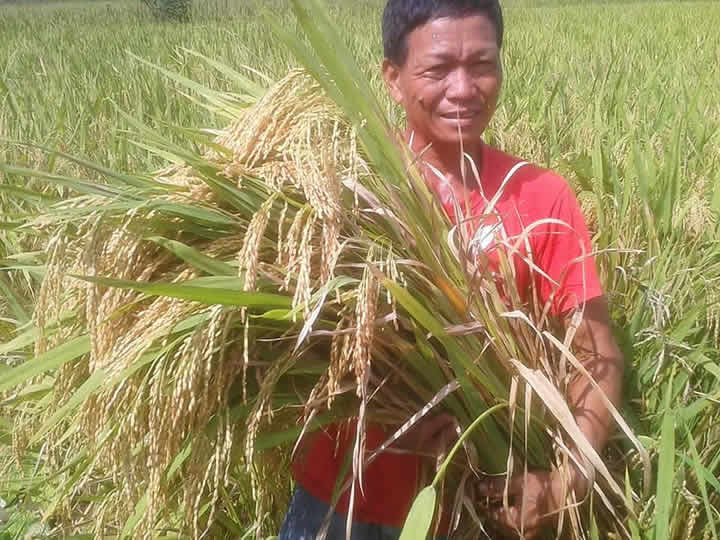
[October 8, 2018] According to an October 8 article on the League of Organic Agriculture Municipalities in the Philippines (LOAMC-Philippines), Ruben Dayaday (at right) of Barangay Daanbanwa, Lambunao, Iloilo, who is currently growing rice using Organic SRI methods, harvested 10.2 tons/hectare. This is approximately 204 sacks/hectare at 50 kilos per sack of paddy and is a new record for this group. [See LOAMC article and November 21 facebook page post for more information.]
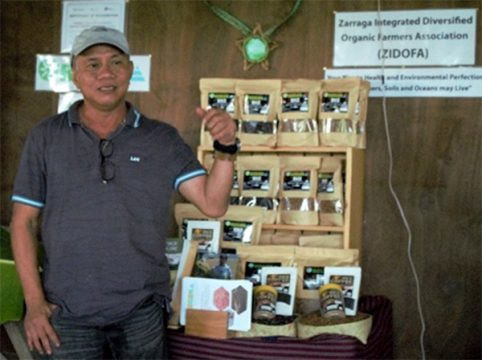
[January 26, 2018] The Department of Science and Technology (DOST) Secretary Fortunato T. de la Peña commended a group of organic farmers in Zarraga, Iloilo, for providing scientific knowledge and cutting-edge technological innovations to the public. De la Peña cited the Zarraga Integrated
Diversified Organic Farmers Association (ZIDOFA), an NGO dedicated to creating a closed-loop organic food value chain, during his visit to its project site. ZIDOFA promotes the SRI methods to achieve greater yields by helping small-farmers interested in converting some of their lands to organic farm areas undergo series of trainings and seminars. The group's assistance, however, continues from nursery management until post-harvest drying and milling, packaging and marketing. “Congratulations, you might be the first agricultural product to be endorsed in OneStore. This is something well accomplished,” said De la Peña. DOST’s OneStore is an e-commerce web application platform that operates nationwide and caters primarily to Philippine consumers which aims to further assist the Micro, Small and Medium Enterprises (MSMEs) widen the scope of their target market.
ZIDOFA also presented a machine they are developing for weeding. The research and development team of ZIDOFA plans to incorporate artificial intelligence to cover certain parameters in farming. ZIDOFA Chairman Joby Arandela (shown at left) said, “We are very thankful that DOST is supporting Non-Government Organizations (NGOs) like us. We hope to help the community here in Iloilo and the farmers to become productive and competitive because I believe that people from Western Visayas can compete not only here in the Philippines, but in the whole Asia as well." [See full article in the Daily Guardian.]
2017
[November 13, 2017] A recent article by Joby Arandela on the Panorama website outlines how the Zarraga Integrated Diversified Organic Farmers Association (ZIDOFA) on Panay (click on map at left to enlarge location) is spearheading an initiative that uses a holistic value chain approach in order to produce high quality, safe, affordable and healthy organic SRI rice for Filipino consumers,
while protecting, conserving and restoring biodiversity in the farm and marine and coastal ecosystems. According to Arandela, this will bring the benefits and the credit back to the farmers and empower them through the creation of a closed-loop organic SRI rice value chain devoid of exploitative middlemen and traders. The immediate beneficiaries are the small-farmers and their families and the 8 barangays (villages) they live in, though 40,000 other farmers could potentially be impacted. The Panorama Solutions for a Healthy Planet, of which ZIDOFA is one, were presented a side event at COP23 in Bonn on November 16, 2017.
Due to its organic SRI initiative, ZIDOFA has also been in the news recently, having been chosen as one of the BPI Sinag Accelerate top 5 Social Enterprises in the Philippines from among 20 finalists. (See BPI Sinag's short facebook video on ZIDOFA). The recognition comes with 500k Php (~10,000 USD), which is earmarked for purchase and consolidation of SRI farmers' organic paddy rice, including drying, milling, packaging and eventual marketing. With this award, Arandela feels that ZIDOFA is slowly nearing the targeted completion of a closed-loop organic SRI rice value chain. (The rice mill and warehouse structures and the delivery vehicles are the last remaining critical gaps to be filled.) In addition to the BPI Sinag Accelerate achievement, the Department of Agriculture Regional Field Office 6 has awarded a mechanized transplanter to ZIDOFA at the Western Visayas Integrated Agricultural Research Center (WESVIARC), which was handed over by the Agriculture Secretary on November 17 as part of his program to mechanize agriculture. (See Panay News article for details).
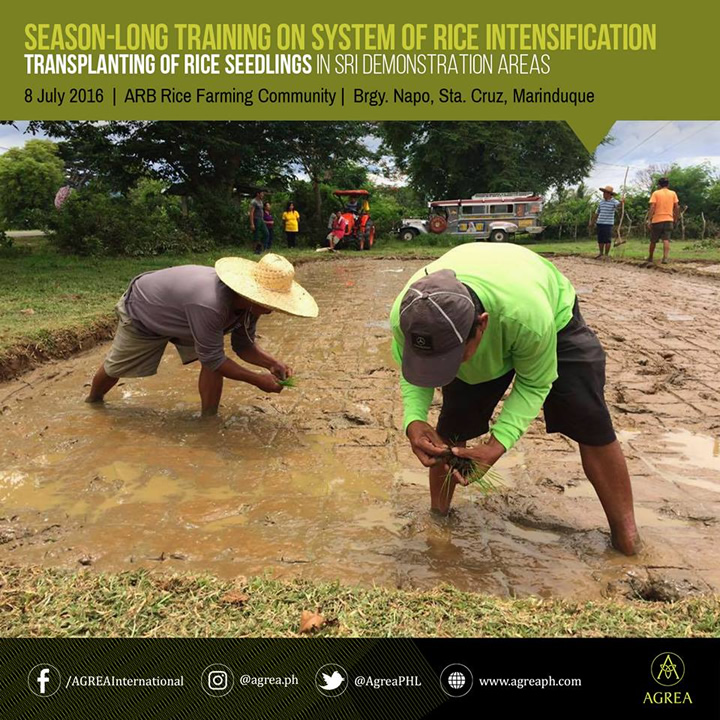
[February 2017] AGREA Philippines, a social enterprise and foundation, has been making progress with promoting SRI and other agroecological activities on the island of Marinduque in the Philippines. A recent video about Cherri Atilano, AGREA's founder and president, is available in the series on ASEAN's Nest Generation Leaders.
During 2016, AGREA began working closely with the Department of Agrarian Reform (DAR) Marinade Office and the SRI-Pilipinas Network in the implementation of a season-long System of Rice Intensification training in Marinduque, Philippines. Demonstration farms are being set up in five rice farming communities in Brgy. Cawit in Boac, Brgy. Napo and Brgy. Baliis in Sta. Cruz, Antipolo, Brgy. Malibago in Torrijos, and Brgy. Malbog in Buenavista. According to Venancio Garde, SRI Pilipinas trainer for this season-long program, "SRI increases the rice yield by a great margin, 20% or more.... When they try SRI and earn from it, there is no going back." Atilano added, "We are replicating effective farming systems so that we can create food security in the island. It all boils down to this: When there is food security, there is food sovereignty. There will come a time when all the food consumed in Marinduque are farmed by Marinduque farmers." According to Senior Agrarian Reform Program Officer Ella Orilla, DAR supports the SRI program as it demonstrates viability of SRI organic farming, and "to establish income generating projects for our beneficiaries, to develop important organic farming skills and to promote self-reliance for our farmers." SRI has been identified as a solution for climate and disaster risk resiliency.
2016
[September 26, 2016] Pasali's Extension Service Provider team recently
conducted a three-day training on System of Rice Intensification (SRI) methodologies August 30 to September 1, 2016, at Pasali Learning and Resource Center in Barangay Baliango, Palimbang, Sultan Kudarat. The training, which was attended by 31 farmers from different barangays of Palimbang, was intended to promote SRI as climate-smart agro-ecological methodology for increasing the productivity of rice by changing the management of plants, soil, water and nutrients. According to the article on Pasali's website, the training fits with the government’s plan to attain rice sufficiency within the first two years of Duterte Administration. The training was facilitated by Prof. Mansueto Cuaton from the Mindanao State University College of Agriculture, who noted that farmers have an opportunity to produce organically grown rice products and traditional rice varieties through SRI. The training was enhance by Pasali's experience with SRI, which which began in 2005. Pasali also worked on a number of manual and mechanized weeder prototypes between 2005 and 2011.
[April 2016] A farmer in La Union province, Federico Rullamas, reported that his second season crop of high-value organic red rice not only provided a high market price, but also won him the "Highest Yielder for Naturally Grown Organic Rice Farming" award in 2015. Rullamas (right) recorded a yield of 70 cavans/hectare using SRI using composted chicken
manure plus home-made organic sprays which he learned from SRI Pilipinas trainer Venancio Garde Jr. [See January 6 article in Philippine Daily Inquirer and a feature story on Rullamas on the SRI-Rice website.]
An April 14 article on the Philippines Information Agency website, which also covers Rullamas' achievements, further expands on the role of the Aringay municipality's support for SRI extension in La Union. Engr. Benjamin Magno from the the local agriculture office reported that the local government provided four months of seed-to-seed training to the farmers to boost their rice production. Beginning with four farmer-adopters in 2013, there are now 120 farmer-adopters of SRI in eight villages in the municipality. The Aringay government allotted an annual budget of P300,000 (about $6,350) from the development fund to ensure sustainability of the program, which includes provision of training, assistance in the production of organic fertilizers and pesticides and equipment. To further educate other farmers regarding SRI, a 1.6 hectare techno-demo farm, in partnership with the Don Mariano Marcos Memorial State University, is expected to be developed this year.
2015
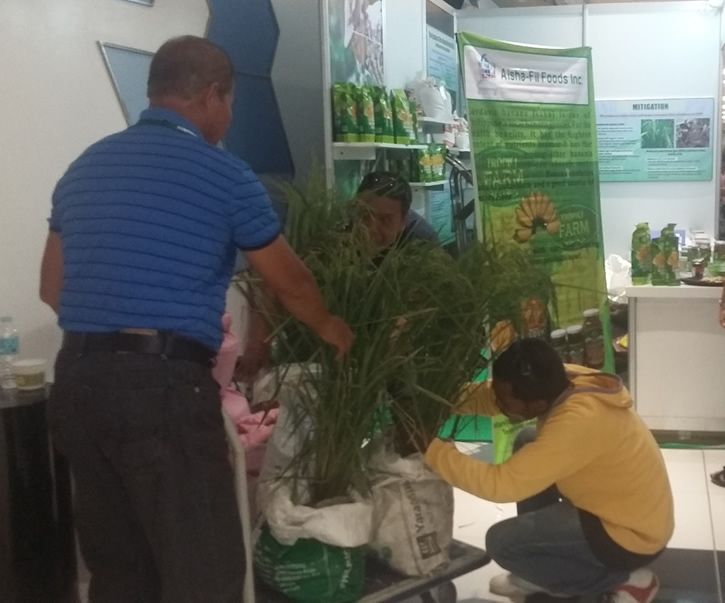
[December 15, 2015] Joby Arandela and farmers from the Zarraga Integrated Diversified Organic Farmers Association (ZIDOFA) in Iloilo, Philippines, who have successfully y grown indigenous rice varieties with System of Rice Intensification (SRI) methods this season, manned an SRI booth (right) at the National Organic Agriculture Congress in Bacolod City, Negros Occidental. This event, which included an exhibition and trade fair, was held November 25-29, 2015. Visitors to the booth were reportedly so impressed by the differential and profusely-tillering SRI plant
specimens (left) that many begged to buy ‘SRI seed’ for themselves. This gave Joby and the Iloilo farmers at the event an opportunity to explain that the difference was not due to the seed used, but to the management methods employed. Several attendees from Mindanao who were already practicing SRI joined the Iloilo farmers at the booth to help explain SRI to curious attendees. One of the four rotary weeders on display was bought by the Vice Governor of Surigao Province since he was intending to introduce SRI to farmers there. There was interest from organic businesses as well as organic farms in the Iloilo rice as well as requests to provide SRI training to farmer groups in other regions.
Participation in the Congress led to additional invitations and attendance at events by Joby and ZIDOFA during December: participation in a National Exhibition on Agricultural Mechanization, December 1-3, a Regional Agri-Aqua Trade Fair and Exhibit in the province of Antique, December 6-12, and the Central Philippine University Climate Smart Agriculture and Organic Trade Fair. [See Arandela's report for details. There is also a video on how the Zarraga farmers produce SRI.]
Caritas Project SRI Farmers in Samar Report Successful Yield Despite Water Shortage
[November, 2015] Although the El Niño phenomenon has been affecting parts of the Philippines with season-long droughts, rice in SRI fields is successfully being harvested in Marabut and Basey on Samar Island, Philippines. Farmers associated with the Caritas Czech Republic project being implemented by Diocese Social Action Center of Calbayog (DSAC) have gained knowledge how to plant resilient, organic rice with less water. By using SRI methods, the beneficiaries reportedly are among the few farmers able to harvest rice in rainfed areas in Samar. SRI methods are being used to promote organic farming and encourage local production of organic fertilizers in Samar. For more information, see the Philippines page of the Caritas website.
[October 22, 2015] Separate graduation ceremonies on October 21 and 22 marked the successful conclusion of the five-month season-long training on "Organic Rice Farming Using SRI" in the towns of Siocon and Sirawai, both in the province of Zamboanga del Norte. Town mayor Julius Lobrigas attended the October 21 ceremony in Siocon, and town mayor Gamar A. Janihim attended the October 22 ceremony in Sirawai. Officials of the Department of Agrarian Reform were present in both ceremonies, as well as the national coordinator Roberto Verzola and regional coordinator Adelberto Baniqued of SRI Pilipinas. Displayed during the ceremonies were sample rice plants that produced as many as 63 tillers from crop cuts that suggested yields of 6 tons/ha in some trial plots up to 8 tons/ha in other trial plots. During the ceremonies, farmers happy and surprised at the results, having attained them with lower costs and without chemical inputs.
Philippine Delegation Attends SE Asia Regional SRI Conference in Malaysia
The Southeast Asia Conference on the System of Rice Intensification (SRI), held May 26-28 in Alor Setar, Malaysia, was attended by four participants from the Philippines: Dr. Carmelita Cervantes of the Central Bicol State University for Agriculture (Pili, Camarines Norte) and SRI Pilipinas coordinator for Bicol, retired director Adelberto Baniqued of the Department of Agrarian Reform Region 9, currently SRI Pilipinas coordinator for Western Mindanao, Lala Pablo of the Rice Watch Action Network (RWAN), and Roberto Verzola, SRI Pilipinas national coordinator. Verzola, shown at right demonstrating his planting technique at the SRI Lovely field visit, made a presentation on the SRI Pilipinas experience in promoting SRI. Baniqued and Pablo also made presentations on their activities. Cervantes attended the special session on the multi-country SRI-Rice arsenic project, which she is taking part in. The Philippine participants were present at the side events for SRI equipment development, the SRI Global Research Network, and a meeting on the final day of the conference to begin creating a SE Asia regional SRI network.
[May 15, 2015] According to an article on the Department of Agrarian Reform website, about 120 agrarian reform beneficiaries (ARBs) in Zamboanga del Norte are graduates of the System of Rice Intensification (SRI) training offered by the Department of Agrarian Reform (DAR). DAR Regional Director Felix Aguhob, who said the course aims to train ARBs in increasing the production of organic rice, also noted that while labor intensive,
the yield with SRI is double the normal rice yield. The three-month intensive training was simultaneously conducted in the four barangays of Dipolog City namely Barangays Olingan, Punta, Turno and Gulayon. Farmer are expected to share the SRI methods with other farmers to increase their productivity. Mayor Evelyn T. Uy emphasized the importance of team work and dedication of the people behind the implementation of the Intensive Training for Organic Rice Production through SRI.
SRI Regional Coordinator Adelberto Baniqued was involved in teaching farmers how to apply the new knowledge gained from the training on farms. The SRI training started on December 9, 2014, to March 24, 2015 and was implemented under the DCS3 Expanded Agrarian Reform Community. [...more]
2014 Updates
[April 4, 2014] According to a Philippine Information Agency article, on April 3, 90 farmers from barangays Rizal, Miligan and Culo Agrarian Reform Communities (ARCs) of in the municipality of Molave finished a season-long Farmers' Field School (FFS) on Organic Rice Production with SRI. The program was a joint undertaking of the Department of Agrarian Reform (DAR) Agrarian Reform Communities Programme 2 (ARCP2) Agri Enterprise Development Component (AED) and the local government unit of Molave through its Municipal Agricultural Office. Prior to the graduation ceremonies, a group of dignitaries and other guests led by SRI Pilipinas Coordinator Roberto Verzola, DAR officials headed by Provincial Agrarian Reform Officer II Arturo Soria, municipal officials and the farmer-graduates visited the different SRI trial sites in the above-mentioned barangays. [...more]
[March 31, 2014] Success with SRI come from a variety of sources in the Philippines. A recent article by Roberto Verzola tells of the story of Julita "Kit" Colcol, a farmer from Sta. Cecilia, Aringay, La Union, who explained to participants of a rice production workshop how she personally came to understand the principles of SRI. Comparing the practices to raising children, Kit (at right in blue shirt) was able to see the value of reducing competition for resources by focusing on single seedlings and their early healthy establishment. She obtained a yield of 6.7 tons/ha this year, a 40% increase over what she was harvesting before trying out SRI. (See Verzola's article for details.)
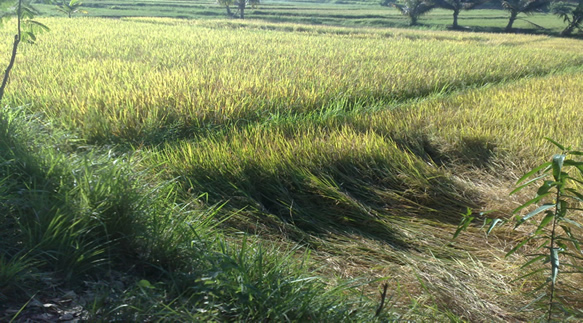
Climate resilience: Felix Sarte, a rice seed grower from the municipality of Limay, in Bataan Province, discussed resilience of his SRI-grown plants with Roberto
Verzola (see photo set). As seen in the photo at left, the non-SRI fields on the left has lodged after high winds, while the SRI field did not. Sarte reported that the thick and deep roots that rice plants develop when they go through a series of wet-dry spells (also called intermittent irrigation, or alternate wetting and drying) help the plants in a number of ways. During the dry spells, the plants send out more roots to search for water. As the upper part of the soil dries, and the water level goes down, the roots grow towards the water. Thus, they go deeper. With thick and deep roots, he says, the rice plants withstand strong winds, flood water and typhoons better. They can also survive droughts longer, because they can find more moisture in deeper soil. (John Vidal also mentions SRI in relation to climate change resilience in his March 31 article in the Guardian's Global Development blog.) This makes SRI a great adaptation measure for coping with extreme weather events and other climate change impacts.
Weekend farmers: Other recent interesting success stories in the Philippines come from the "weekend farmers," who leave their jobs in the city at the end of the work week to try out innovative rice practices in their hometowns in the provinces. Recent interviews with two of these innovators, Joey Tolentino and Eddy Pedroso Canyuto can be found in our SRI interviews playlist. Dr. Tolentino was able to harvest an amazing 16 tons/ha on his farm in Nueva Ecija! (Thailand has a very active "weekend farmers network." We hope they will have a chance to meet their colleagues in the Philippines someday!)
2013 Updates
[September 9, 2013] At least 115 participants have entered the organic SRI contest that is ongoing throughout the Philippines. Representatives from the Department of Agriculture, the village government unit, and SRI-Pilipinas were present to supervise the competition's first crop cut, which took place in Camarines Sur Province on September 9. Contestant harvests will continue every few days until contest competition deadline on December 15. The second round with begin during early 2014. SRI-Pilipinas will announce the officially verified SRI record high after the second round; all yield measurements include at least 4,000 sq. According to Roberto Verzola, the contest target is to set the Philippine record for rice yield .... and keep it.
SRI-Pilipinas, the contest sponsor, has prepared maps of the locations of the participants in Luzon and in Palawan, Visayas, and Mindanao. The details of the contest can be found below.
[July 1, 2013] A 137 page book on the System of Rice Intensification is now available from SRI-Pilipinas for P300 including shipping. Written in Pilipino, Ang Sistema sa Pagpapalago ng Palay is for farmers, cooperatives and other groups interested in SRI methods. Group trainings and free primers are also available to individual farmers by texting Roberto Verzola at (0939) 1178999.
[April 9, 2013] SRI Pilipinas, the national SRI network in the Philippines, announced its intent to hold a friendly contest for SRI rice farming beginning in June 2013. The competition, which includes categories for high-cost irrigated, low-cost irrigated, and rain-fed plots, will consist of two rounds:
- Round 1 will be held in the second cropping season of 2013 (June - Nov. 2013). This qualifying round will select the highest-yielding entries from three categories of small-scale SRI trials (in plots of 100-500 m2). The selected entries qualify for the second round.
- Round 2 (the second and final round) will be held in the next cropping season (the 2014 dry season for irrigated, and the 2014 wet season for rain-fed). This round will select from production-scale SRI trials (in fields of at least 4,000 m2) the five highest-yielding entries in each category, who will be declared the contest winners.
The top five winners in each category will receive cash prizes ranging from 1,000 to 20,000 pesos. Any rice farmer (farm owners, tenants and farm workers) in the Philippines is welcome to join. SRI trainers will have a separate category. (Details are available by contacting the SRI Pilipinas Hotline: 0939-117-8999). Participants will receive free training materials and lessons so that they may follow the recommended SRI principles and practices and avoid practices that would disqualify them from the contest. SRI Pilipinas will hold a free seminar (no hands-on) or training (with hands-on) for at least ten contestants (a partnership counting as one) who request such a service.
[April 7, 2013] A recent mb.com.ph article reported that the Philippine government signed a memorandum of agreement (MOA) on rice trade with the Kingdom of Cambodia to pave the way for the National Food Authority (NFA) to import rice from that country for the next two years. The MOA opens the way for the NFA to import rice from Cambodia through Green Trade, a Cambodian public enterprise. The article further reports that Cambodia’s success in rice farming can be attributed in large part to the Cambodian Center for Study and Development in Agriculture (CEDAC), an NGO that has promoted SRI methods since 2000. Between 2002 and 2010, Cambodia’s rice production ballooned from 3.82 million tons to 7.97 million tons. Y.S. Koma, CEDAC's Director, was given the prestigious Ramon Magsaysay Award last year for his contributions to farming technology in Cambodia. Over 100,000 Cambodian rice farmers are reportedly now using SRI, which dramatically cuts down on the use of agrochemicals.
2011-2012
View interactive SRI Pilipinas (LUZON) Trainers, Trials,
and Trainings in a LARGER MAP
View interactive SRI Pilipinas (VISAYAS AND MINDANAO)
Trainers, Trials, and Trainings in a LARGER MAP
[June 25, 2012] Between 2010 and mid-2012, SRI-Pilipinas has conducted around 120 trainings nationwide, each training attended by 20-25 farmers. Usually a training includes a demo SRI trial on a small plot, so most trainings also involve one SRI trial (and therefore one adopter, the farmer who provided the plot where the demo trial is conducted).The interactive map at right, constructed by Roberto Verzola during May 2012, pinpoints resource persons as well as locations of individual trials by farmer-adopters in Luzon and Mindoro who first tried SRI after requesting and receiving the SRI-Pilipinas primer. The map at left shows these locations for the Visayas and Mindanao. (Click on the blue icons for farm names and white icons for trainer locations.) SRI trainers, and the trainings are gradually being added in, so be sure to check for updates in the near future.
[January 2012] SRI-Pilipinas' 2011-2012 National SRI Training Project is currently underway throughout the Philippines with the assistance of Oxfam Great Britain. A National Evaluation/Planning Workshop/Conference was held on July 29-31, 2011, at the Department of Agriculture, Quezon City, followed by a smaller meeting that was held on November 10-11, 2011, for Mindanao trainers.
One hundred one-day SRI trainings were planned for 2011-2012. As of January 2012, trainings by 13 trainers in 24 municipalities in 12 provinces had been carried out.
Through the National SRI Training Project, which also supports research on SRI, SRI-Pilipinas is currently collaborating with researchers and students at the University of Southern Mindanao, Kabacan, and Western Mindanao State University. Discussions on supporting collaborative SRI research are also underway at Central Luzon State University, Visayas State University and the University of the Philippines at Los Baños.
Since August 1, 2011, SRI-Pilipinas has distributed, through the operation of its SRI Hotline, more than 600 copies of the SRI Primer. Sixty copies of the SRI video and around 30 copies of an SRI Book were also distributed. As in the previous year, the primers were distributed to farmers who texted their name and address to the SRI Hotline (0939-117-8999); the videos where sent by courier to those farmers who, after receiving the primer or engaging the Hotline in conversation, decided to actually try SRI out in their rice field. The SRI Book is primarily provided to government officials, academics, and other individuals and institutions.
Of 636 SRI Primers distributed, 41.3% of those who confirmed receipt of the booklet said they will try SRI, and 15.4% actually tried it. The SRI Hotline has proven itself a viable supplementary tool for social marketing among the least privileged. A Bisayan language SRI Hotline is being considered and if successful, other languages may follow.
The NGO PASALI, which began promoting SRI in 2006, is now officially partnering with Catholic Relief Services for the extension of SRI trainings in Mindanao, particularly Sultan Kudarat. PASALI's Tagalog-language SRI manual is now online as are two 2010 videos showing weeders technical staff are involved in developing and testing for the NGO's projects (see motorized weeder and 12V battery drive motorized weeder videos).
According to Shane Pulmano, PASALI has been selected to be the Department of Agriculture's service extension provider for SRI and is awaiting the official seals of this partnership, which should translate into extension of SRI into more areas as well as closer ties with the government agriculture programs. He also noted that the NGO Rural Development Institute of Sultan Kudarat (RDISK), who undertook a 2010 SRI training with PASALI, has recently received Oxfam support for promoting SRI in RDISK's Mindanao projects.
Additional Mindanao news: A Sun Star article reported that SRI was included in the First Mindanao Organic Farming Congress, held Feb. 19-22, 2012, in Dumingag, Zamboanga del Sur.
1998-2011
FOR 1998-2011 SRI ACTIVITES, see SRI PHILIPPINES ARCHIVES
Reports and Articles
Project reports and evaluations
- RAFIS DA6. 2025. A success story of unity and progress of AMIA Villages in Dao, Capiz. Department of Agriculture - Western Visayas (Philippines) website. January 21. [147 farmer in AMIA program (Duyoc and Lacaron, Capiz) accessed ₱2.7 million from Dept. of Ag. for SRI and related efforts.]
- Khandai, S., A. Tripathi, et al. 2018. Modification of existing power weeder and study on the cost economics of different weeding methods. International Journal of Pure & Applied Bioscience 6(6): 60-63. doi:10.18782/2320-7051.7108.
- Baniqued, Adelberto. 2021. A brief activity report on the USAID/Center for Disaster Preparedness (CDP) sponsored season-long (October 2020 to March 2021) Organic System of Rice Intensification (SRI) in Lower Tiparak, Tambulig and Switch, Ramon Magsaysay, Province of Zamboanga de Sur, Mindanao, The Philippines. SRI-Rice website. (8p. pdf)
- Cacacho, Eleanor L., et al. 2020. Assessment of the organic-based system of rice intensification (SRI) under coastal rice field ecosystem. Indian Journal of Science and Technology 13(18): 1867-1872 doi:10.17485/IJST/v13i18.
- 2016. Pasali conducts training on System of Rice Intensification methodologies. Pasali Philippines website. September 19. [31 farmers get SRI training at Pasali Center in Sultan Kudarat, Philippines, Aug. 30-Sept. 1, 2016.]
- Arandela, Joby. 2015. SRI presented at National Organic Agriculture Congress in Bacolod City. SRI-Rice website. (2p. 61KB pdf)
- 2015. Harvest in the Philippines. Humanitarian Aid and Development Cooperation (Charita) website. November. [Caritas Czech Republic project in Samar, Philippines, has a successful yield with SRI despite water shortage.]
- Verzola, Roberto. 2015. SRI advocacy in the Philippines: A case study. Ecology, technology and social change website. May.
- ADRA. 2013. SRI familiarization and DRR Course in Mercedes. ADRA website. May 22. [321 farmers get SRI familiarization course on April 16. Thirty potential trainers to receive subsequent 16 week training.]
- Verzola, Roberto. 2010. Final report, 2009 National Workshop-Conference of SRI Trainers. System of Rice Intensification website. February. (37p., 377KB pdf). [Report prepared for Oxfam-GB]
- Verzola, Roberto. 2010. SRI-Pilipinas Provincial Training Program - Terminal report (Draft) - Appendix J of the Final report, 2009 National Workshop-Conference of SRI Trainers. System of Rice Intensification website. February. (4p. pdf).
- Revilla, Gracielle M. 2009. Documentation of rice-based farming system and adoption of system of rice intensification in Brgy. Cogonan, Nasugbu, Batangas. Undergraduate Theses, University of the Philippines, Los Baños.
- Uyloan, John Terrence M. 2008. Agronomic, morphological, and physiological differences of lowland rice grown under System of Rice Intensification (SRI) and conventional production system using three methods of fertilization. University of the Philippines at Los Baños. Master's thesis. [This 88p. thesis is accessible at the International Rice Research Institute Library - SB218 .U59 2008.]
- de la Rosa, Zosimo M. 2006. System of Rice Intensification and conventional rice culture: A demonstration trial at VSU Campus, Baybay City, Leyte, Philippines. FARMI, Visayas State University. System of Rice Intensification website. (15p., pdf)
- Uphoff, Norman T. 2003-2006. Several trip reports the Philippines: March 2003, March 2004, March 2005, March 2006. System of Rice Intensification website. [Trip reports to review the status of SRI in the Philippines on behalf of the Cornell International Institute for Food, Agriculture and Development]
- Mulu, Dobech. 2004. Effect of seedling age, spacing and season on phyllochrons, yield and components of yield with
SRI. Masters’ Thesis. University of the Philippines, Los Baños. (not online)- 2004. SRI on-farm trials in eastern Visayas. Leyte State University. System of Rice Intensification website. [Progress Report on ALO Project undertaken by LSU and Cornell University.]
- Gasparillo, Robert. 2002. Growth and yield response of traditional upland rice on different distance of planting using azucena variety. System of Rice Intensification website. (4p. 57kb pdf)
- Gasparillo, Robert. 2002. SRI experience in the Philippines. Paper presented at the international conference on Assessments of the System of Rice Intensification (SRI), April 1-4, in Sanya, China.
Newspaper articles, website posts and blog entries
- 2026. Bicolano ARBs learn climate-smart rice farming. Business Mirror. June 24. [Twenty-eight members of Agrarian Reform Beneficiary Organizations (ARBOs) underwent intensive training on SRI].
- 2025. 7 towns in EV set to scale up rice production through SRI. Dept. of Agriculture, Eastern Visayas Facebook post. May 15.
- 2023. Enhancing rice farming in Philippines. The Philippine Star, November 5,
- 2023. Philippines considers sustainable rice production method amidst rising costs and water scarcity. The Thaiger, October 27.
- 2023. BSWM strengthens CFBW implementation through site visits and monitoring. Bureau of Soils and Water Management - Dept. of Agriculture of the Republic of the Philippines. October 17. [The Composting Facility for Biodegradable Wastes (CFBW) is an income generation for the Farmers Associations because the Local Government Unit (LGU) of Dao, Capiz, buys back the compost for distribution to SRI farmers.]
- 2023. Council endorses DA's P396-B 2024 budget. Manila Times, May 3. [Rice Watch Action Network Executive Director and Federation of Free Farmers Cooperatives National Manager reiterated recommendation to the DA to adopt SRI]
- Bagonggong, Cherry Jane V. 2022. AEWs in ZamPen undergone training on organic rice-based production. ATI Zamboanga Peninsula website. September 14. [Agricultural Training Institute – Regional Training Center IX (ATI-RTC IX) conducted training on Organic Rice-Based Production (Organic System of Rice Intensification and Stewardship) to the Agricultural Extension Workers (AEWs) of Region 9, in Zamboanga, Philippines.]
- Selda Jr., Eleazar N. 2021. Benepisyaryo ng grarian reform sa mogpog nagsanay ng sri/. Marinduque News. December 7. [50 Agrarian Reform Beneficiaries from Bintakay Farmers Association, had a 2-day SRI training under the Climate Resiliency Farm Productivity Support Program of the Department of Agrarian Reform in Marinduque.]
- Sarian, Zac B. 2020. Dennis Miguel: He wanted to break the world record rice yield! zac b. sarian blog. Ocotber 4. [Filipino who tried to break the world rice yield record with SRI in 2019 reflects on his efforts which ultimately yielded 10 tons/ha.]
- Eleogo, R.R. 2019. Ceremonial Planting on System of Rice Intensification. Ronda Balita online News. August 2.
- Jaurigue, Maridelle G. 2019. AEWs capacitated on System of Rice Intensification (SRI) and extension delivery modalities. ATI in CaLaBaRzon website. May 14. [Twenty-nine Rice Agricultural Extension Workers (AEWs) of Cavite, Batangas, Rizal and Laguna participated in the “Capability Enhancement Course for Rice AEWs Batch 1” to acquire skills to apply SRI successfully and gain updates on rice technology and extension delivery modalities.]
- Leidia, Mary Grace P. 2019. ATI capacitated LFTs on product stewardship and System of Rice Intensification. Agriculture Training Institute (ATI) website. [26 Rice Local Farmer Technicians (LFTs) of Calabarzon (Region IV-A) participated in the “Training Course on SRI and Product Stewardship for LFTs Batch 1” held at City of Springs, Los Baños, Laguna, Philippines, April 1 to 5, 2019.]
- 2019. Department of Agriculture and SRI advocates worked together to unravel the rice Crisis. NICE Sustainable Ag Network website. January 17.
- Basia, Mathet, and Lydia Boclig. 2019. Towards rice sufficiency, System of Rice Intensification (SRI) trial farm in Lamag. Center for Development Programs in the Cordillera website. January 5. [Lamag Farmers’ Association (LFA) in barangay Lamag of Quirino, Ilocos Sur, Philippines are experimenting with SRI with help from Center for Development Programs in the Cordillera (CDPC).]
- 2018. Our new organic systems of rice intensification (SRI) record. LOAMC-Philippines website. [Dayaday of Barangay Daanbanwa, Lambunao, Iloilo, Philippines, harvested 10.2 tons/hectare or approximately 204 sacks/hectare at 50 kilos per sack of paddy. LOAMC that reported the results stands for League of Organic Agriculture Municipalities in the Philippines, Incorporated (LOAMC-Philippines)]
- Basia, Mathet, and Lydia Boclig. 2018. Towards rice sufficiency, System of Rice Intensification (SRI) trial farm in Lamag. Center for Development Programs in the Cordillera (CDPC) website. August 3. [Women members of the Lamag Farmers’ Association (LFA) in barangay Lamag of Quirino Ilocos Sur, Philippines, have begun testing SRI.]
- Tan, Yvette. 2018. Iloilo Association helps rice farmers transition to organic farming. Agriculture Monthly. June 4. [Article of Joby Arandella and the ZIDOFA farmers' SRI activities in Iloilo, Philippines.]
- Gabiota, J.R. 2018. DOST exec hails organic farmers, assures technical support. The Daily Guardian. January 26. [ZIDOFA Farmers Group gets accolades for SRI work]
January 26, 2018, The Daily Guardian (Panay, Philippines)- Toreno, Sheila Mae H. 2018. Organic, regenerative agriculture thru SRI cultivation. The Daily Guardian, January 15. [Story of Zarraga Integrated Diversified Organic Farmers Association (ZIDOFA), who have used organic SRI since 2015]
- Agustin, Rose Jeanette. 2017. Try this unconventional farming for a better yield. GoodNewsPilipinas.com. December 28. [Article about the NGO AGREA in Marinduque.]
- Arandela, Joby. 2017. The System of Rice Intensification (SRI) in the Philippines to benefit farmers, consumers and biodiversity. Panorama website. November 13.
- Sarian, Zac B. 2017. DENNIS MIGUEL: Money Is Not Everything. zac b. sarian blog. [Dennis Miguel's reaction to getting the front cover in the Philippines' Agriculture magazine regarding his efforts to break the world SRI record with SRI methods.]
- Meniano, Sarwell Q. 2017. Samar town to showcase rice planting technologies. metrocebu webiste. June 8. [Participating firms of Samar rice derby 9Samar, Philippines) are SL Agritech, Bayer Crop Science, Syngenta Philippines, Longping Tropical Rice Development, PhilsCAT, DuPont Pioneer Hi-Bred and, SeedWorks, PhilRice and, the System of Rice Intensification technology led by DA regional office.
- Sarian, Zac B. 2017. Just one rice seedling per hill will yield high. Manila Bulletin. May 6, 2017.
- Sarian, Zac B. 2017. From 50 cavans to 200 cavans per hectare Manila Bulletin. April 27, 2017.
- Sarian, Zac B. 2017. Dennis Miguel: Set to establish record yield in rice. zac b. sarian blog. March 8.
- Otarra, Cheenee. 2017. Agrea: The next sexy thing. Taste blog. January 18. [Article on Cherrie Atilano from the NGO AGREA PH in Marinduque, Philippines. AGREA uses SRI in their programs.]
- 2016. Organic-Based System of Rice Intensification (SRI) - Philippines. WOCAT website. March 17. [Description of an organic SRI project the incorporates ducks for weed control. The project is part of Caritas' Sustainable Learning Agricultural Farm in Marabut, Samar, Philippines.] [accessed January 16, 2017]
- Alunan, Michael M. 2016. Is the rice industry finally on the rise? Business Mirror, November 22. [Jesse Las Maria says with systems like SRI costs of rice production can be brought down to P4 to P6 per kilo, which are already competitive with Philippines neighbors.]
- Obligacion, Eli J. 2016. While changing the narrative of farming in PH, Agrea's Cherrie Atilano receives top awards. Marindugue Rising. November 12. [Update on the work of the NGO AGREA, which includes organic SRI, in Marinduque, Philippines.]
- Hilario, Frank. 2016. Green dreams: IRRI shares the hope. iWord Affairs blog. October 27.
- 2016. Season-long training on System of Rice Intensification. AGREA facebook page. July 8. [Post on a an SRI training in Marinduque, Philippines.]
- 2016. Changing the narrative on farming in the Philippines. AGREA(ph) website. June 29. [SRI training program by AGREA, a social enterprise and foundation, to four rice-farming communities in Marinduque.]
- Arandela, Joby. 2016. There is no hard-reset or factory reset for the environment. Life from Ridge to Reef blog. July 2. [Progress on trying the organic SRI in Panay, Philippines, after after a year.]
- 2016. A field of hope. ADRA Philippines website. May? [Farmers learn SRI from ADRA in Leyte as part of recovery efforts from Typhoon Haiyan]
- Sabado, Joanna D. 2016. La Union farmers cite better yield from organic farming. Philippine Information Agency, April 14. (La Union, Philippines)
- Verzola, Roberto. 2016. SRI Stories: Meet Federico Rullamas, an SRI Farmer in La Union, Philippines. SRI-Rice website. January 15.
- 2016. Climate-friendly rice growing method yields more. Philippine Daily Inquirer, January 6. [SRI farmer wins “Highest Yielder for Naturally Grown Organic Rice Farming” award in 2015 using SRI.]
- Pascua, Joyce. 2015. Expert discusses viable rice production method in CSC lecture. August 30. [Review of Roberto Verzola's SRI lecture at Cordillera Studies Center, University of the Philippines]
- Reambonanza, Soccorro. 2015. DAR trains farmers in rice intensification. Department of Agrarian Reform website. May 11.
- Bollier, David. 2013. Insights from the Asian deep dive on the Commons. David Bollier blog. March 26.
- Patnugutan. 2014. Pangatoen ti apit babaen iti system of rice intensification. Nordis website. August 17. (Philippines)
- Ordoñez, Ernesto M. 2014. The very serious rice problem, Philippine Daily Inquirer. May 6.
- Ordoñez, Ernesto M. 2014. Inspiration in the middle of 'Yolanda' desperation, Philippine Daily Inquirer. April 26. [Benedictine nun who heads the Agriculture and Rural Alternative Development Options Foundation in Tacloban, Leyte, promotes SRI as part of post-hurricane program.]
- Vidal, John. 2014. Philippine experts divided over climate change action. The Guardian's GlobalDevelopment blog. April 8. [Article on breeding at IRRI vs SRI for climate resilience.]
- 2014. Zambo Sur farmers complete rice production training. Balita website. April 4. [90 farmers in Molave, Zamboanga del Sur, Philippines finish season-long FFS on organic SRI]
- Lanipa, Claro A. 2014. 90 farmers finish season-long field school in Molave. Philippines Information Agency website. April 4. [90 farmers from in Molave, Zamboanga del Sur, finished a season-long Farmers' Field School on organic SRI.]
- Cherry, Emily. 2014. Young adults form faith through service in the Philippines. Episcopal News Service website. April 4. [An article on church volunteers says that Episcopal Church in the Philippines is one of the biggest proponents of SRI.]
- Vidal, John. 2014. Haiyan - harbinger of things to come? The Guardian's GlobalDevelopment blog. March 31. [John Vidal mentions SRI in connection with climate change resilience in Philippines.]
- Verzola, Roberto. 2014. Seed grower appreciates the resilience to strong winds of SRI-grown rice. System of Rice Intensification website. March 31. (2p, 660KB pdf) [Farmer in Bataan Province in the Philippines documents SRI's resistance to lodging in high winds.]
- Verzola, Roberto. 2014. Aringay farmer improves rice yield by 40%. System of Rice Intensification website. March 26. [A woman farmer in La Union Province explains how she came to understand SRI.]
- Villanueva, Larry. 2013. A tale of two farmers. Institute for Climate and Sustainable Cities website. December 6.
- PNA. 2013. Farmers of two Zambo Sur towns undergo management training. Business Mirror, December 2. [200 farmers from two municipalities in Zamboanga del Sur hope to increase yield by 20 percent with SRI.]
- Verzola, Roberto. 2013. SRI success on first try: how a "weekend farmer" in Laur, Nueva Ecija got a 338-cavan/hectare rice yield. Ecology, technology and social change blog. July 15. [Story of how Joey Tolentino, a physician, got record-breaking yields with SRI on the weekends.]
- SRI-Pilinas. 2013. Ang Sistema sa Pagpapalago ng Palay. Ecology, technology and social change website. July 7. (137p.) [Pilipino language book for farmers, cooperatives and other groups interested in SRI methods.]
- Escandor Jr., Juan. 2013. Rice planting system promises better yield, Bicol Mail, June 7.[Article from a press conference at Central Bicol State Univ. of Agriculture in the Philippines] (reprinted in Inquirer News on June 9)
- Bernabe, Kirstin. 2013. Filipino rice farmers urged to follow India, Philippine Daily Inquirer, May 24.
- Quismorio, Ellson A. 2013. PH to import rice from Cambodia [Article attributes some of Cambodian rice success to SRI] Open Development Cambodia blog. April 7. [Article attributes some of Cambodian rice success to SRI]
- Bollier, David. 2013. Insights from the Asian deep dive on the Commons. David Bollier blog. March 26.
- Aranas, Maricar. 2012. Guv: Palay production up, Daily Star, Negros Oriental edition. December 29. [Paddy production increased in Negros Oriental due to Provincial Government's promotion of SRI]
December 29, 2012, The Visayan Star (Negros Oriental, Philippines)- 2012. Ernährungssicherung ist friedenssicherung. Brot für die Welt website. October 24. [German NGO article on its support for the Pasali SRI projects in Mindanao]
- 2012. 2012 Magsaysay awardees teach farmers science and business, PhilStar, October 14.
- Quismundo, Tarra. 2012. Cambodian rice expert produces 'more with less', Inquirer Global Nation, August 30.
- Bondoc, Jarius. 2012. Northern Metro Manila sinking fast - experts, Philippine Star, August 29, Opinion section.
- Ng, Jennifer. 2012. Ramon Magsaysay awardee pushes SRI for palay production. Business Mirror August 28.
- Batas, Mauricio. "SRI": Revolutionary way of rice growing in RP, Zamboanga Today Online, August 16.
- Benaning, Marvyn N. 2012. New rice growing method pushed, Mb.com.ph, May 2.
- 2012. Extension of the System of Rice Intensification. A Single Grain of Rice blog. February 18.
- Garcia, Bong. 2012. First Mindanao organic farming congress set. Sun Star, February 17.
Similar article: 2012. Zambo Sur to host 1st Mindanao Organic Farming Congress, Agro-Tourism Fair. Mindanao Examiner, February 17.- 2011. Indian farmer sets new world record in rice yield. The Philippine Star, agriculture section. December 18.
- Benaning, Marvyn N. 2011. Scientists note novel rice-growing method. Mb.Ph.com website. November 3. [The third paragraph has an error that says SRI itself was actually developed for hybrids and even GM strains.]
- Illo, Jeanne and Dante Dalabajan. 2011. World Food Day: Feeding the future. Philippine Daily Inquirer. October 15. [SRI reference is in the Rice Intensification section]
- Benaning, Marvyn N. 2011. SRI-grown rice resists typhoon. Pakistan Rice Bank website. October 8.
- Benaning, Marvyn N. 2011. Primer on rice growing method. High Beam Research website. September 7.
- 2011. Modern rice farm system pushed. The Philippine Star, May 1.
- Benaning, Marvyn N. 2011. Drought-tolerant rice variety holds promise. High Beam Research website. March 3.
- 2010. Colombia farmers visited SRI farmers of Palimbang. BlueMarty blog. November 29.
- 2010. The efficient mechanized weeder. BlueMarty blog. September 9.
- 2010. Pasali speaks with Department of Agriculture. A Single Grain of Rice blog. September 9.
- 2010. CRS and three of its partner organizations visited Pasali for SRI training and exposure. BlueMarty blog. July 17.
- Osorio, Emmanuel Libre. 2009. RP can be sufficient in rice within one year. FoodQS.com. September 24.
- Mayuga, Jonathon. 2009. UP study shows benefits of organic rice production. Business Mirror, July 13.
- 2009. 508 farmers trained, 718 more benefit from techno-demo farms under organic agriculture program — DA in balita-dot-ph. April 10.
- Bulayngan, Vercy. 2009. SITMO introduces System of Rice Intensification to Ifugao farmers. PIA Daily News Reader. February 21.
- Remo, Amy. 2008. 'Go Organic' campaign launched with P20M. Philippines Daily Inquirer, November 6.
- Fromm, Joseph. 2008. Jesuit innovation increase rice production. Good Jesuit, Bad Jesuit blog. March 30.
- Mariano, Dan. 2008. System of Rice Intensification. The Manila Times, opinion section (online). March 31.
- Verzola, Roberto S. 2004. System of Rice Intensification (SRI): Practices and Results in the Philippines. Ecology, technology and social change blog.
Practical Information
- 2023. SRI-Pilipinas brochure and principles. SRI-Pilipinas website.
- 2011. Ang Sistema ng Pagpapalago ng Palay (Sipag-Palay o SRI). SRI-Pilipinas. System of Rice Intensification website. (4p., 1.39MB pdf) [Pilipino language manual used provided by the SRI-Pilipinas network. The 4-page download can be used to reconstruct an 8-page primer. Copies can also be accessed by contacting the SRI-Pilipinas Network as their text hotline (0939-117-8999)]
- 2009. Ang SRI (System of Rice Intensification). PASALI Philippines Foundation. Issuu.com website. (4p pdf). [Tagalog language SRI manual developed for use in PASALI's programs in Mindanao, Philippines]
- SRI - Binag-o nga Pagpananum Sang Humay. Kahublagan Sang Panimalay Foundation. System of Rice Intensification website. (2p. trifold brochure, 1.27MB pdf). [Ilonggo language translation of an extension brochure originally prepared by Leyte State University's Farm and Resource Management Institute. Translated by the Kahublagan Sang Panimalay Foundation, Inc., Iloilo, Philippines]
- More rice with less water through SRI. System of Rice Intensification website. (8p., 143KB pdf) [This SRI manual has been adapted by Dr. Pam Fernandez, University of the Philippines at Los Baños, from materials by Norman Uphoff and and article in ECHO Development Notes no.70 by D. Berkelaar.]
- SRI - Achieving more with less: A new way of rice cultivation. World Bank website. (8p. pdf) [A multimedia toolkit produced by the World Bank Institute]
National SRI Workshops and Trainings in the Philippines
- 2018. SRI training for govt.sfaff in the Department of Agriculture's Rice program (in cooperation with the Agricultural Training Institute (ATI))
The first batch of training was attended by the 32 Rice Focal Persons – two from each of the country’s 16 regions last December 5-6, 2018. The training was consists of a two-day orientation involving lectures and practicum, and then a season-long trial and demonstration by each participant on a 100-500 square meter plot.
- December 5-6, 2018.- 2009 National Conference-Workshop of SRI Trainers
Jointly hosted by SRI-Pilipinas, the Bureau of Soils and Water Management, and the Agricultural Training Institute with Oxfam-GB funding
- Sept. 28-30, 2009, Bureau of Soils and Water Management Central Office, Quezon City, and
- Nov. 20-22, 2009, Agricultural Training Institute (ATI) Training Center in Kabacan, Cotabato- A training program on SRI was facilitated by the Provincial Government of Kalinga through the Office of the OPAg. Thirty farmers leaders participated in this event held at the Davidson Hotel, Bulanao, Tabuk City on September 20-21, 2007
- A National SRI Workshop hosted the Philippines Rural Reconstruction Movement (PRRM) was held in Quezon City on March 19, 2004.
- A Farmer's Symposium, hosted by the Philippines Rural Reconstruction Movement (PRRM) and co-sponsored by the Philippine Greens, was held March 12, 2003.
- A National SRI Workshop hosted the Philippines Rural Reconstruction Movement (PRRM) was held in Quezon City (?) during April 2002.
Videos
- 2021 (August 10, 2021). System of Rice Intensification introduction video. 4:13 min. Rice Watch Action Network, Inc. channel, YouTube. [Tagalog language SRI instructional video from long-time SRI trainer Rene Jaranilla in the Philippines.]
- 2020 (November 10). Ano Ang System of Rice Intensification (SRI System) / Oleg's Fishing Farming Edition. 9:52 min. Oleg's Fishing channel, YouTube. [Tagalog language SRI description from the Philippines.]
- 2020 (October 30). System of Rice Intensification (SRI) Initiatives in the Cordillera Rice Terraces. 4:17 min. CDPC Cordillera channel, YouTube. [SRI activities by the Center for Development Programs in the Cordilleras (CDPC) Network in the Philippines.]
- 2017. (November 5). BPI Sinag Finalist: ZIDOFA. 0.57 min. BPI Sinag Facebook.
- 2016 (November 16). Project Compassion 2017 - Dinia from the Philippines. 5:23 min. caritasaustralia channel, YouTube. [Story about a woman from Daet, Camarines Norte, Philippines, who is part of a Caritas Australia, project that includes SRI.] [accessed March 6, 2017]
- 2017 (January 5). ASEAN's Next Generation Leaders (ANGeLs) - EP2: Cherri Atilano. 23:53 min. Channel NewsAsia, Toggle website. [Video about Cherri Atilano, founder of the NGO AGREA on the island of Marinduque.]
- 2016 (April 28). System of Rice Intensification in the Philippines. Ferdinand Zamora channel, YouTube. [SRI explanation with some commentary by Eddy Pedroso Canyuto.]
- 2015 (August 12). Climate-resiliency Field School: System of Rice Intensification. Francis Ebalo channel, YouTube [The original SRI video made in Indonesia by ADRA New Zealand reissued for use by Rice Watch and Action Network (R1) in the Philippines.]
- 2015 (September 2). Challenges and Benefits of SRI A Participatory Video. 6:07 min. IIRR: International Institute of Rural Reconstruction channel, YouTube. [Video with SRI farmers in Arbismen, Quezon, Philippines]
- 2014 (April 11). System of Rice Intensification (SRI) - Farm in Zarraga, Iloilo. 10:18 min. Joby Arandela Channel, YouTube. [Video of a seminar about the Zarraga SRI Demo Farm (Iloilo) at made at the Central Philippine University (CPU) College of Agriculture, Resources and Environmental Science (CARES)]
- 2013 (September 28). Interview with Interview with Eddy Pedroso Canyuto about the System of Rice Intensification. 3:02 min. SRI-Rice channel, YouTube.
- 2013 (September 24). Interview with Roberto Verzola, SRI-Pilipinas Network (Philippines). 1:50 min. SRI-Rice channel, YouTube.
- 2013 (September 22). Interview with Joey Tolentino, "weekend SRI farmer" in Laur, Nueva Ecija, Philippines. 5:00 min. SRI-Rice channel, YouTube.
- Video: 2013 (June 9). SRI Pilipinas, isinusulong ang organic rice farming sa bansa. 0.41 min. PTV channel, YouTube. [Tagalog TV clip about SRI in the Philippines.] [accessed July10, 2017]
- 2013. (April 23). Participatory video on the challenges and benefits of System of Rice Intensification. 6:07 min. Written and directed by people of Barangay Arbismen, Quezon. Produced by International Institute for Rural Reconstruction (IIRR). Mary Ann Llanza channel YouTube. (Tagalog with English subtitles obtained by turning on cc button on the YouTube screen.) [This motivational video from Barangay Arbismen, Guinayangan, Quezon, Philippines, covers implementation and benefits of SRI, which supported by Peace and Equity Foundation.]
- 2013. (February 22). Modified Organic System of Rice Intensification (MOSRI). 0:34 min. AND the view three weeks later. chedudee channel, YouTube. [Manual transplanting technique without bending the body. Uses 8-12 day old rice seedlings grown in the organic fertilizer-filled micro pots of plastic tray. SAFEGCC (Sustainable Agriculture and Family/-centered Group of Co-Creators), Inc. in Balingasag, Misamis Oriental, Philippines in cooperation with Christian Rural Development Institute (CRDI), South Korea.]
- 2013 (February 15). Highly efficient broadcasting of rice seedlings. 0.20 min. chedudee channel, YouTube. [This video is taken in BREAD (Biodynamic-based Rice Eco-intensification and Agri-ecotourism Diversified ) Learning Farm School of Balingasag, Misamis Oriental, Philippines.]
- 2012 (September 21). SRI-Philippines 2012. 14:48 min. Produced by Renan Yadao Nibut. Renan Nibut channel, YouTube. [Video about SRI on on a farm in Payas Brgy, San Jose Sur Agoo, La Union, Philippines]
- 2010 (September 8). Pasali SRI motorized weeder 2010. jeromelosanes channel, YouTube. 1:17 min. [Weeder tested by the NGO PASALI's Technical Center technicians at Palimbang, Sultan Kudarat, Mindanao. It takes 10 hours to manage one hectare with this mechanized weeder compared to 28 days for manual weeder.]
- 2010 (May 10). PASALI SRI 12V Battery Drive Motorized Weeder. MrJayson1910 channel, YouTube. 1:40 min. [Prototype of a PASALI single row DC battery-drive motorized weeder designed and fabricated by PASALI technical center and machine shop, Brgy. Kanipaan, Palimbang, Sultan Kudarat, Philippines. Basically, it was designed for battery-drive and a solar-charging station as renewable energy source to combat/fight global warming or climate change]
- 2008. Achieving more with less: SRI - A new way of rice cultivation: Two English language videos together with other resources has been produced by the World Bank Institute as a multimedia toolkit
1) Overview of SRI - Improving Rice Productivity and Achieving Water Savings. 12. min. [Video intended for policy and decision makers, managers of development projects, and stakeholders involved in agriculture, water resource and irrigation management.]
2) "How-to" Guide for Farmers and Practitioners. 15 min. [Video based on an application in the Philippines; intended for farmers and practitioners who are interested to see how SRI is applied on the ground.]- 2008. Alternative Rice Planting Method Key to Self-Sufficiency: Produced by Alecks P. Pabico. 10:25 min. Daily PCIJ Blog. [Tagalog language video about SRI in the Philippines. Note: scroll down through blog to get to video.]
PowerPoint Presentations
(Notes: Click here to see most of SRI Philippines presentations on slideshare.net. Transcripts are at the bottom of each presentation. There is a "full screen" button at the lower right corner of the presentation to enlarge the presentation. If you have trouble viewing the slideshow, make sure you have Flash installed and JavaScript enabled.)
- 2009. From Madagascar to the Rice Terraces of Ifugao: SRI Validation and Promotion in the Province of Ifugao
- PowerPoint presentation by ISAPA / SITMo. 38 slides- 2007. SRI, Seeds and Software: Converging Advocacies?
- PowerPoint presentation given by Roberto Verzola, Coordinator, SRI Pilipinas Rice Research Institute at a workshop on SRI, held at the World Rice Research Conference, Tsukuba, Japan, November 7, 2004. 22 slides.- 2004. The Effect of Seedling Age, Spacing, Yield Season on Phyllochron, Yield Components of Rice, using the Principals of the System of Rice Intensification (SRI)
- PowerPoint presentation by Dobech Enquayehush Mulu, MSc University of the Philippines, Los Baños. 61 slides.- 2006. System of Rice Intensification (SRI): The Farmers Field School Way
- PowerPoint by Manual G. Jayectin, Agricultural Training Institute, Regional Training Center 7. 10 slides- 2006. System of Rice Intensification (SRI) On-Farm Trials in Eastern Visayas
-PowerPoint by Zosimo M. de la Rosa, Regional Program Coordinator, Dr. Fe M. Gabunada, and other program participants. 39 slides.- 2005. GIS Evaluation for SRI
- PowerPoint presentation. 10 slides.- 2005. Expansion of Margate "Enhanced" System of Rice Intensification - SRI
- PowerPoint presentation compiled by R.C. Lazaro. 6 slides.- 2004. SRI & TQPM Trial Demo Farms in the Visayas: Negros Occidental Trials in the Magballo-Balicotoc-Canlamay Integrated Irrigation Systems under SPISP of NIA and ADB: 2003-2004 Wet and Dry Season Trials
- PowerPoint presentation on trials supported by the subproject staff, Municipal Agriculture Office, and the Agricultural Training Institute as well as the consultants’ consortium for SPISP. 17 slides.- 2004. SRI Trial in the Caraga Region XIII National Irrigation Administration
- PowerPoint for the Southern Philippines Irrigation Sector Project (SPISP) of ADB, and the Lower Agusan Development Project (LADP) of the Japan Bank for International Cooperation. 11 slides.- 2004. SRI Trials - Analysis Trials Carried Out on the Personal Farm of the Regional Irrigation Manager of NIA Caraga Region 13 in 2003.
-PowerPoint presentation. 13 slides.- 2004. SRI Trial - Organic Fertilizer Production Process & Ratooning
- PowerPoint presentation on trials at the personal farm of the Regional Irrigation Manager (RIM) for NIA Region 13 in Caraga, Mindanao . 8 slides.- 2004. System of Rice Intensification System of Rice Intensification: Pabinhi Farmers' Experience
- PowerPoint presentation by Rene Jaranilla, Dionito Eñano and Gerry Garingalao about SRI experiences in Guimaras in Western Visayas. 35 slides.- 2003. SRI, TQPM, SRI (modified), and Minus-One Element in SPISP
-PowerPoint presentation by Roger Lazaro, SPMOs at Magballo, Butuan, and Cebu. 20 slides.